American football · CODEMODEAPPS EDITORIAL
Build a football card theme beyond quarterbacks
Use running backs, receivers and defenders to give a football research checklist a clear theme and a balanced starting point.
Published October 7, 2026 · 4 min read
Choose roles before choosing references
A football collection can reflect the parts of the game you enjoy watching. Begin with a running back, receiver and defender, then decide whether your theme follows an era, a favorite team or a particular release. You do not need to reproduce a full lineup. Three well-defined research slots make a practical starting point and leave room to explain why each player belongs. Keep the scope in a sentence at the top of your checklist. If a new candidate does not fit that sentence, place it on a separate ideas list rather than quietly broadening the project.
Use a vintage issue to anchor the theme
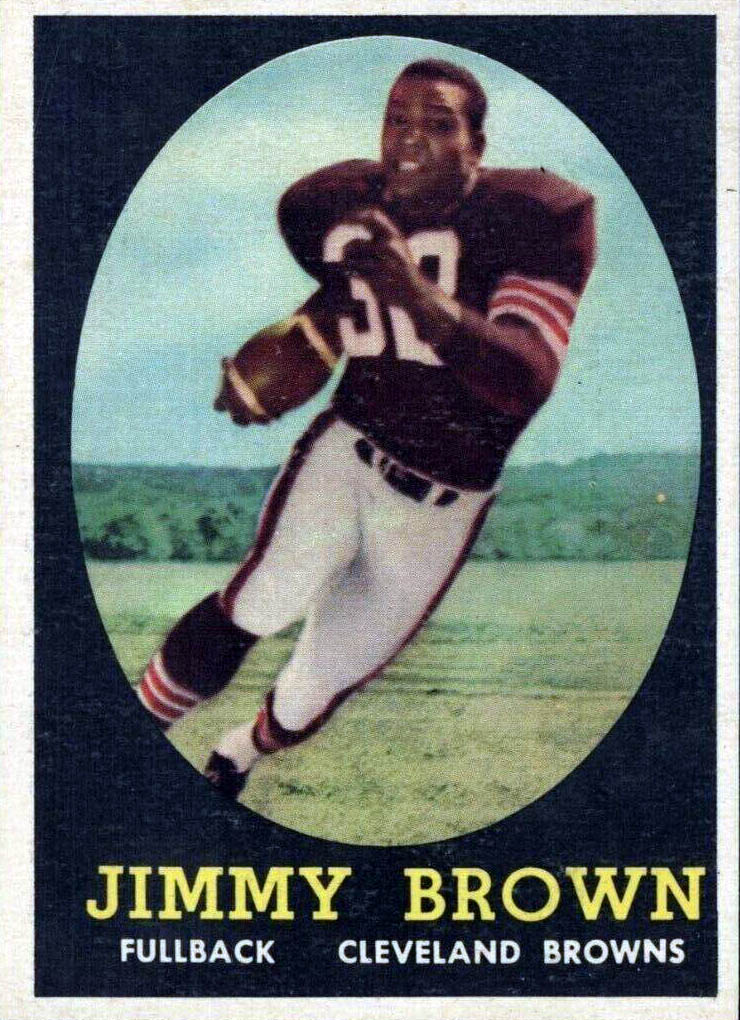
The catalog’s Jim Brown reference is 1958 Topps #62, and its Jerry Rice reference is 1986 Topps #161. These exact identities make useful anchors for a timeline organized around different offensive roles. Follow each primary source before adopting its collecting status or condition notes. The fact that both references use Topps does not make them members of the same release or format. In a timeline, place the complete label next to the player so the set remains visible. Our editorial suggestion is to explain your choice in one sentence, such as a receiver reference from a particular period you enjoy researching.
Keep modern positions within an exact release
PSA’s Prized Prizm Rookies article identifies Saquon Barkley’s 2018 Prizm #202 and Justin Jefferson’s 2020 Prizm #398. These examples let you explore running-back and receiver issues while retaining a familiar release family. Copy the specific year and number instead of writing only Prizm rookie. If you want a single-year project, do not silently mix the two releases to fill a position. Either narrow your scope further or explain that your theme spans years. A checklist becomes easier to complete when its rules are visible, even if the research reveals that a different theme would suit you better.
Give defensive references the same research depth
Micah Parsons’s selected reference is 2021 Panini Prizm #382, whose identity fields are confirmed by the linked PSA record. The rookie wording and base/autograph category distinctions come from the previously reviewed Beckett checklist; its direct page was unavailable during this article’s October 7 review. The PSA record alone does not establish those checklist claims. Give a defensive reference the same research care as an offensive one: full release, year, number, edition and evidence. When a headline omits details, request clarification. Position is a useful organizing idea, but your defensive slot should contain a documented issue rather than just a player name.
Decide whether team history or card appearance leads
A personal theme may follow the player’s career or the team represented on the issue. State which approach you use. If you collect the team shown on a card, rely on its image and checklist identity rather than the player’s current club. If you collect a career, keep changes in release and team context as separate notes. This distinction prevents a familiar name from placing an item in the wrong binder section. Our recommended record has an issue label, your theme slot and a brief reason it fits. A source can identify the issue; the collecting reason remains your own decision.
Use a completion rule that matches your interest
Before extending the checklist, decide what counts as a finished research entry. A useful rule is one exact issue with a working primary source, a clear edition label and any unresolved photograph request recorded. Completion need not mean purchasing the item. Review the running-back, receiver and defender slots together in Compare, then keep your own notes about candidates and storage. Replacing a vague entry with a better-documented one is progress even when the list does not grow. A balanced football theme works because the references tell a story you chose, not because it follows a market ranking or predicts future demand.
Sources and further reading
- PSA CardFacts: 1958 Topps Football and Jim Brown #62 (opens in a new tab)
- PSA CardFacts: Jerry Rice 1986 Topps #161 (opens in a new tab)
- PSA: Prized Prizm Rookies, Barkley and Jefferson issue identities (opens in a new tab)
- PSA identity: Micah Parsons 2021 Prizm #382; identity fields only (opens in a new tab)
- Beckett: 2021 Prizm Football checklist; unavailable during October 7 review (opens in a new tab)